Thursday, 14 May 2015

Day 7 The Long Road East

the Picos appearing through the morning clouds - our hotel in the foreground.
Today, as the title suggests, we left the Picos de Europa region after a little more birding in the area. We saw Marsh Tit and heard Wrybill but never got onto it. Red Squirrel was also a stand out!!

During our drive we had a few stops. One was for lunch at a village where we dined in the square, directly across from a huge and antique Catholic Church. Many in the group wandered in.

Our other stop was in an area of beautiful wild flowers; some pictured below. Rock Sparrow was seen but certainly not well by moi. We got better views of both Tawny and Tree Pipits; both new birds for the trip. Repeat views of Red legged Partridge plus Song and Wood larks, Northern Wheatear and Great Tits.

The drive, more or less, detailed on the map below was tiring however the lest one or two hours were spectacular.

Our hotel was very, very welcome when we arrived at 8pm!


Tree Pipit

Tree Pipit 2

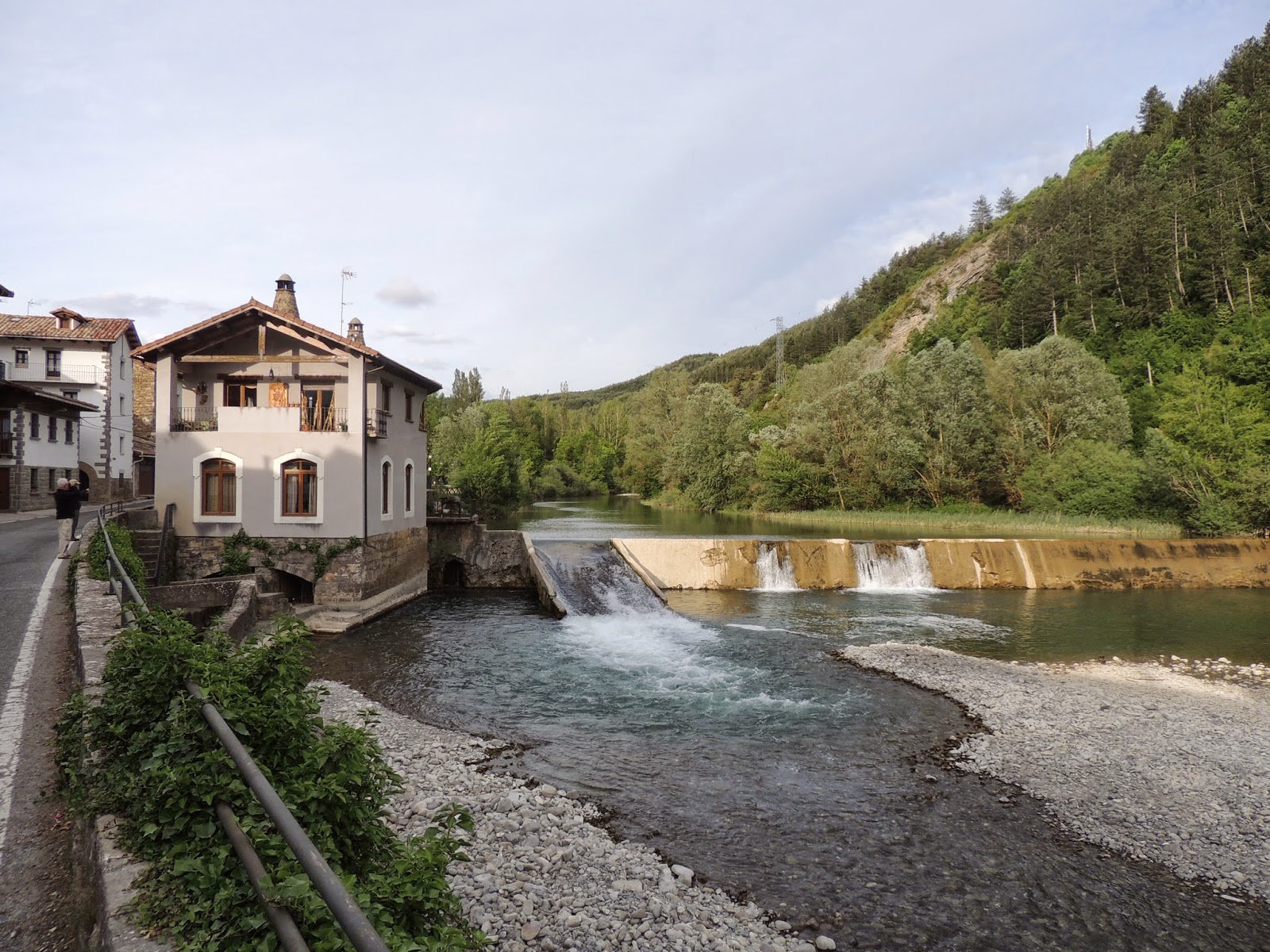
Roncal Valley scene

Roncal Valley 

Black Redstart


Wednesday, 13 May 2015

Day 6 Picos de Europa


The Picos de Europa (literally: "Peaks of Europe", often abbreviated in English to the Picos) is a range of mountains 20 km inland from the northern coast of Spain, located in the Autonomous Communities of Asturias, Cantabria and Castile and León, forming part of the Cantabrian Mountains. The most widely accepted origin for the name is that they were the first sight of Europe for ships arriving from the Americas. from Wikipedia.


From our base at the wonderful hotel del Oso [which i cannot recommend highly enough - fantastic food in particular although too much!!] we birded locally and then went arriba in a cable car to the snow line. At this altitude we had good opportunitites to see som egenuine alpine spp. The first to appear were Alpine Choughs; some clumsily dropped food had them joining us. [Red-billed Choughs had already been seen at the base of the chairlift as had the bimbo - Firecrest]. Other bird species followed; Water Pipit, Wheatear, Alpine Accentor and Snow Finch. The Pyrannean chamois - another great mammal tick was seen; overall some 8 animals. We searched in vain for another special Wallcreeper but the bird remained invisible. Lammergeier, another major target species soared past along with other species such as Griffon vulture and Buzzard.
Spanish Yeti

Firecrest - Bimbo!

arriba
Snowfinch

A smart male Grey Wagtail


Alping Accentor

Spotted Flycatcher

Pyrannean Chamois

Alpine Chough

a very crappy but identifiable Dipper

action man and birder - Steve West - our guide 

Northern Wheatear

our hotel - we scored it 12 out of 10
Relaxing in the Hotel's lobby

Tuesday, 12 May 2015

Day 5 The Long Road North...

Vince, Maria, Ken, June, Karen, Steve, Russ, Jan, Ray and Norm. 
Today was a big day with a big drive with some big birds and a big [nay, enormous] meal to end.

We started near Monfrague National Park and we started quite early, leaving our hotel at about 8am after a good continental breakfast.  We drove north through the National Park, passing the wonderful birds and scenery of yesterday and hit the highway.

The first stop for the day was for a big dip. Our big dip was Dipper. Now I like the sound of that but I detest the meaning. For Steve he informed us, a little too casually that this was the only time he had dipped on Dipper at this place. Still it was a nice place and one oculd easily see why Dippers would like it. We had to content ourselves with White Wagtail and a real Bimbo for many - a Grey Wagtail.
No Dipper Bridge
Dippers? De nada.
Now an explanation is in order about the use of the term, Bimbo. The subject came up, innocently enough when a Van drove past with a large, 'BIMBO' sign on it. Russ enquired regarding the nature of the sign, obviously intrigued about the possibilities of a van filled wih Bimbos. It turned out that Bimbo is a brand of bread. Now Steve also informed us that Bimbo is a Spanish birding term for lifer.

So now the hunt for Bimbos was on! I've never looked so hard for Bimbos and, for once, we didn't have to wait long.

At a reasonably high pass in the hills we saw....
Whitethroat - a Bimbo for some
Bimbo #1 - Ortolan Bunting - singing
the crappiest picture of an Ortolan Bunting that has ever been put on a blog...

for some Bimbo #2 - Linnet

And for others Bimbo #3 - Dunnock.
Dunnock
Another lizard spp?
That is a fast Bimbo rate.

Still we drove on; past Carrion Crows, Kestrels, Red and Black Kites and the occasional Booted Eagle and even a male Montague Harrier.

Another stop yielded a zoom past of a Firecrest but another, more convincing Bimbo - Western Bonnelli's Warbler. A Eurasian Hobby did a fly by also.

The drive north continued.

Lunch punctuated the drive. Tapas.

Northward driving across the plains. Plains. Plains. More Plains. Birds of the Plains. Small villages, each with old churches with bell towers with nests of White Storks. White Storks seem primed to take over all of Spain.  

And then, almost suddenly, snow on mountains through the heat haze and dust. The Picos de Europa. The drive north turned from the horizontal towards the vertical and upward we climbed.

A brief pause for anothe Bimbo Warbler; the Iberian Chiffchaff. An identical bird to the normal chiffchaff of England and elsewhere but where the normal Chiffchaff goes steadily Chiff - Chaff, the Iberian has a more excited faster tempo. From British ornithologist, Brian Small, "The typical and most well-known song of Iberian Chiffchaff is a characteristic rather short song phrase, made up of short rising and falling notes followed by a simple rattle: this is often transcribed as ‘huit huit huit hweet j-j-j-j-j-j’, or variations on that theme."  

Skylark

Vince, Karen and Ray obscured

Upward, ever upward. At One thousand and six hundred metres elevation we paused; Wonderful scenery with the left over winter snow still clinging to the highest rocks. Birds? Song Lark, Dunnock again, Linnet again, White Wagtail again. Coal Tit singing. Griffon Vulture soaring. And a bimbo for some; Red billed Chough.
Linnet
Higher again to higher hills and greater views. And a bear statue signalling the ongoing presence of the European Brown Bear in this area of Spain.

A full hour after leaving the high slopes of the hills and the big rock bear, and a full twelve hours after leaving our hotel in the morning we rolled into the carpark of our hotel for a two night stay. After being in the hotel for some ten minutes, I already cannot wait to return with my wife.

The hotel has stunning views to the mountains beyond and trade on the bear too, with its motiff being found on signs, pictures and even towels. The hotel is great however I must make one serious complaint; the food is excellent but the portion sizes are huge. I started with a local soup [which was made with pork and beans] - it arrived in a small cauldron. As an entree it was a meal in its self for two and needless to say I did not get near finishing it.  could only sit in a fat and bewildered stupor drinking the house red wine while i waited for the main. Pork steaks plus fries plus grilled capsicum [peppers]. Again I bravely ate on but, alas, was defeated. My only plausible explanation was that they thought we were Americans.

Tomorow thankfully a small sleep in before heading up into the mountains.....  

Sunday, 10 May 2015

Day 4 Monfrague National Park

This National Park is an area of dramatic scenery, and is regarded by raptor watchers as one of the most outstanding sites to see birds of prey in Europe.  It is also an excellent place to see not only raptor watchers but birders generally. Nowhere that I have travelled to in the world has had such a high concentration of birders. At our hotel there were several groups and everywhere we stopped in the park there were birders and their accompaniments; binoculars, scopes, huge lenses and the occasional spouse. There were birders from Spain, yes, but there many from England, Holland, USA, and judging from the sandals and socks, other European nations.
Eurasian Griffon Vulture
Soaring birds - mainly vultures
Where there are birders there are almost certainly birds. Monfrague National Park is justly famous for its vultures. Huge Eurasian Griffon Vultures circle each rock pinnacle and nest [and crap] within the folded and faulted rocks. We were lucky[?] enough to see and hear a pair of vultures engaged in the act of love making. Karen was particularly impressed. From that blue scene we saw next a Blue Rock Thrush, another specialty of this area.
Vultures - post coitus
Blue Rock Thrush
I should mention other raptors. Perhaps obviously the bird that many were here to see was a breeding Spanish endemic, The Spanish Imperial Eagle. We saw the birds flying, quite distant but close enough to see some of their diagnostic features. We also found there nest and a moving pale blob that was their chick. Booted Eagle, Black Kites, Black Vultures, Common Buzzard plus Falcons, Peregrine and Common Kestrel were seen soaring also.
Pale phase Booted Eagle
Rock Bunting, Rock Sparrow [seen by some] round out the rock specials.
Rock Bunting
The cliffs and hills were excellent for swifts and swallows. The huge Alpine Swift was found as was the rarer White-rumped Swift. Red-rumped and Barn Swallows competed with Crag and House Martins for the insects above the water and cliffs.

Our first Black Storks were seen; the very first engaged in sitting on its nest.
Nesting Black Storks
Our first Cuckoo was seen plus good views of iconic species such as Golden Oriole, Bee-eater, Hoopoe, Woodchat Shrike. We finally tracked down Western Orphean Warbler while some got good views of Sardinian Warbler. Wren and Linnet were new to our list. Some saw the Hawfinch but as I did not I will spell it differently.

It was a great but very warm day but we enjoyed the many new birds and stunning scenery.
Pasha ?


Tomorrow mainly a driving day as we work our way north.

Day 3 No rain on the plains in spain... a search for some specials

Two Great Bustards!
It was Sunday in Spain and Mothers’ Day in Australia and that, dear readers, was part of my undoing.


Road side Poppies
Bustard photographers

Allow me to explain.

We were going birding to the plains of Extremadura to seek the avian specialities therein. However I was thinking of Mother’s Day when we saw beautiful rows of bright red Poppies lining the roadsides I decided, no insisted, that we stop and pick some flowers for all of the Mothers that were with us. Nice idea. Nice guys finish last.

Steve West, as is right and proper, was in the lead vehicle and I was driving the second vehicle. He and his car were ahead getting great views of one of the main target species – Little Bustards while we were picking flowers. By the time we got there the bird had flown and was a small spot on a distant hill side. Now I would like to say we got great views of the bird as time went on but that would be an exaggeration. We did see the bird later but again the views were distant; spotting the head and neck, distinct as they were, rising out of the grass on a distant hill side.

Another target species had a happier story – the aptly named Great Bustards. The first bird we saw was a female playing now you see me now you don’t in the long grasses of the Spanish Steppes. Again the views were brief but clear and the bird was identifiable, so a lifer to all Aussies assembled. I counted the bird for the first time however a little later when we came upon a distant flock[?] of male Great Bustards assembled on a small ridge. Despite the distance and the heat haze we appreciated quite good views of these well coloured birds.

Sadly no Sandgrouse were seen – only one bird heard by Steve. We did get great views of some other classic birds of the Plains; Montagu’s Harrier, Calandra Larks, Little Owl, the amazing Hoopoe, European Roller [many taking advantage of the huge numbers of nest boxes that adorned many, many power poles that crossed the grasslands].
Calandra LArk
Male Montague's Harrier
Little Owl
We had our picnic lunch at a little cafe as we negotiated to buy some drinks there. The birding highlight was a lifer for all; Spanish Sparrow.
Spanish Sparrow
As per the itinerary we visited the ‘picturesque Trujillo with its large breeding colony of Lesser Kestrels and perhaps a Pallid Swift or two.’ Trujillo is best described by stealing a chunk of text from Wikipedia; 'The old town contains many medieval and renaissance buildings. Many of these were built or enriched by the conquistadors born in the city. These include, the conquerors of Peru, Francisco Pizarro and his brothers, Francisco de Orellana and Hernando de Alarcón. Pizarro's equestrian statue stands in the main square, the Plaza Mayor. The most important monuments are the castle (old Arab fortress), the church of Santa María (thirteenth century), and the church of San Francisco'.
The square of Trujillo
The statue of the Conquistador - Francisco Pizarro
It was a fascinating place for its history and the architecture which reflects its history. Steve pointed out the statue of the town’s most famous historical figure, complete with funny hat. On one of the buildings lay his or his family’s coat of arms, proudly complete with images of South American natives chained and obviously enslaved and one is reminded of how this town and its buildings were paid for – the exploitation of Peru and its original inhabitants.
Trujillo view - nesting White Storks in centre
Still the town and its buildings were impressive and we were not the only things to think so. Beautiful White Cranes were nesting on many of the taller buildings and both Common and Pallid Swifts streaked around the square. Lesser Kestrels, too, were floating over the centre of town although we saw them better when we visited the Trujillo Bull fighting Ring where they were nesting.
White Stork Nests
The afternoon yielded more Bee-eaters, a couple more Rollers, another Iberian Shrike [recently split from Great Grey Shrike], a variety of raptors, more Corn Buntings than you could eat plus the ubiquitous Crested Larks.
European Roller
Another Great Day!
Crested Lark 
Iberian Shrike
The evening meal? I went for grilled vegetables for an entrée, Rabbit and potatoes for a main plus fresh cheese cake and berries and, of course local Red wine.